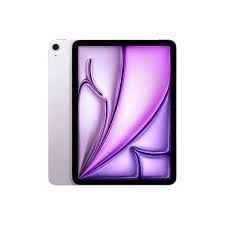
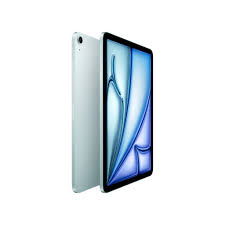
In March 2025, Apple unveiled the newest addition to the iPad lineup: the iPad Air (M3). With the same sleek design as its predecessor but upgraded internals, the M3 variant is tailored to users who crave strong performance without moving up to the iPad Pro tier. Let’s dive into what it offers, its price, and whether it’s worth your money.
Key Features & Specifications
| Feature | Details |
|---|---|
| Models / Sizes | 11-inch and 13-inch variants |
| Display | “Liquid Retina” with P3 wide color, True Tone, anti-reflective coating, fully laminated; 11″ version ~2360×1640 px; 13″ version ~2732×2048 px |
| Chip / Performance | Apple M3 chip: 8-core CPU (4 performance + 4 efficiency), 9-core GPU, 16-core Neural Engine; supports hardware-accelerated ray tracing, mesh shading, dynamic caching |
| Memory & Storage Options | 8 GB RAM (standard) ; storage: 128 GB, 256 GB, 512 GB, 1 TB |
| Cameras & Video | Rear: 12 MP Wide (ƒ/1.8), Smart HDR; front: 12 MP, with Center Stage; 4K video capture, cinematic stabilization, etc. |
| Connectivity | Wi-Fi 6E, Bluetooth 5.3; cellular versions support sub-6 GHz 5G (same modem used previously) |
| Battery & Power | 11-inch: ~28.9 Wh battery; 13-inch: ~36.6 Wh battery |
| Accessories & Features | Supports Apple Pencil Pro and Apple Pencil (USB-C); new Magic Keyboard optimized for iPad Air (M3) with 14-key function row and larger trackpad |
| Design & Build | Maintains sleek, aluminum unibody design; Touch ID integrated into the power button |
| Release & Launch Date | Announced March 4, 2025; availability began March 12, 2025 |
Pricing & Variants
Apple’s official U.S. launch pricing for the iPad Air (M3) is:
- 11-inch Wi-Fi: starts at $599
- 13-inch Wi-Fi: starts at $799
- Cellular (Wi-Fi + Cellular) variants add a premium (e.g. 11″ cellular version priced at $749)
For education buyers, Apple offers discounted pricing:
- 11-inch: $549
- 13-inch: $749
Third-party retailers sometimes offer deals or discounts below the MSRP.
If you’re in Pakistan (or any non-U.S. region), local taxes, import duties, and regional markups will usually increase the retail cost. For instance, a device priced at $599 might retail significantly higher once all costs are included.

What’s New & What’s Improved
- The M3 chip is the headline upgrade — Apple claims it brings nearly 2× of the compute power vs. M1 and up to 40% better graphics performance over M1.
- Neural Engine improvements make AI and ML tasks more fluid, letting apps like image generation, handwriting recognition, or predictive tools run more efficiently.
- A refreshed Magic Keyboard brings a function key row (14 keys), larger trackpad, and is slightly less expensive compared to earlier keyboard versions.
- Otherwise, many physical aspects (build, cameras, design) remain consistent with the prior generation—Apple chose to evolve the internals rather than overhaul the external design.
Strengths & Limitations
Pros:
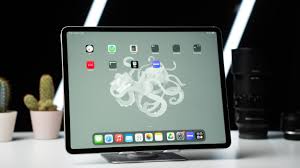
- Excellent performance per dollar compared to more premium tablets
- Great for creative tasks, multitasking, video editing, productivity apps
- Strong battery life with efficient chip
- Support for modern accessories (Pencil Pro, Magic Keyboard)
- Premium build quality and consistent software support
Cons / Things to consider:
- Lacks ProMotion (120 Hz) refresh rate — display is fixed at 60 Hz
- The cost of add-ons (keyboard, Pencil) adds up
- Stylus and keyboard accessories are sold separately
- In markets outside U.S., you’ll face higher costs due to taxes/duties
- If you already own the M2 version, the performance boost may not feel revolutionary
Is It Worth Buying?
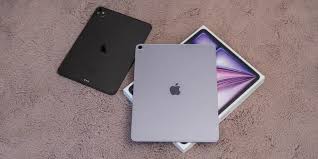
If you’re looking for a tablet that can handle creative work (sketching, photo/video editing), productivity tasks, or even light development tools, the iPad Air (M3) is a compelling middle ground. It offers nearly “Pro-tier” power without the premium price tag of the iPad Pro family.
However, if your use is mostly casual (reading, streaming, notes), or you already own a recent iPad, the upgrade might not feel essential immediately .
Thanks for visiting us.